The Top 5 Places to take Photos in Gran Canaria
10 October 2019
We are well aware that Gran Canaria is a paradise that offers incredible landscapes and this is precisely the reason why every year the island receives more and more visitors with an interest in taking photos during their holidays on the island.
Its variety of landscapes make it a paradise for photography lovers. Gran Canaria is a diverse island, full of shades and contrasts that makes photographers fall in love with all of its sceneries.
An example of how special this island is, which is considered a miniature continent, is that you can be in a coastal setting, surrounded by sun, golden sand, and sea breeze, and in a matter of minutes move to a natural, lush and rural environment, where the feeling of breathing in fresh air merges with the sea breeze that characterises the island.
This variety of microclimates is a result of the volcanic orography of Gran Canaria, which consists of a series of ravines situated between the municipalities of Tejeda and Artenara, from which the natural architecture of the island originates.
These geographical conditions, together with the wealthy and fertile volcanic soil, ensure that year after year photography in Gran Canaria is able to produce snapshots that immortalise unique moments in which all the elements merge into an exceptional, one-of-a-kind image.
The most popular spots and photographic sceneries in Gran Canaria are:
- Natural landscapes: Its natural Parks, filled with endemic fauna and vegetation, can be found in the most famous digital libraries on the internet and remain in the memories of those who enjoy these unique places.
- Sunsets: The sunset in Gran Canaria is a combination of colours, which, together with its landscapes, allows us to enjoy a natural and visual spectacle that is unique in the world.
- Coastal Landscapes: Many of the best beaches in the Atlantic ocean can be found in the Canary Islands. In Gran Canaria, for example, we can enjoy the impressive Maspalomas Dunes, which we will talk about in more detail below.
From the north to the south, Gran Canaria offers opportunities for impressive photographs of different types of beaches, where the golden sand and crystalline waters contrast against the black volcanic sand, typical of many of the beaches in the north of the island.
Gran Canaria: A Photogenic Island
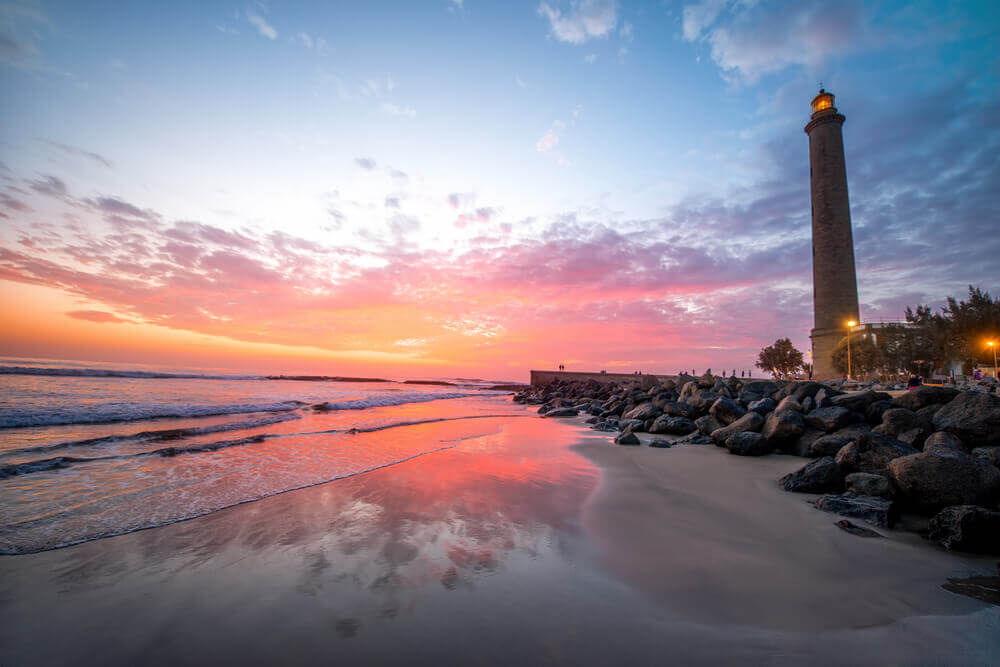
So, knowing that Gran Canaria is a perfect island for taking photographs, we are sure that right now you must be asking yourself which are the best places to take photos in Gran Canaria and which are the key places you must visit to immortalise your holidays to this dream island.
The locations we are going to suggest are of easy access and can be reached comfortably by car. Don't forget that at TopCar we have the best car hire deals in Gran Canaria so that the mere fact of driving to the most incredible places on the island becomes an experience in itself.
We are going to list our five favourite places to take photos in Gran Canaria. We hope you like them and that you don't hesitate to include them in your itinerary for your trip to Gran Canaria.
The Dunes of Maspalomas
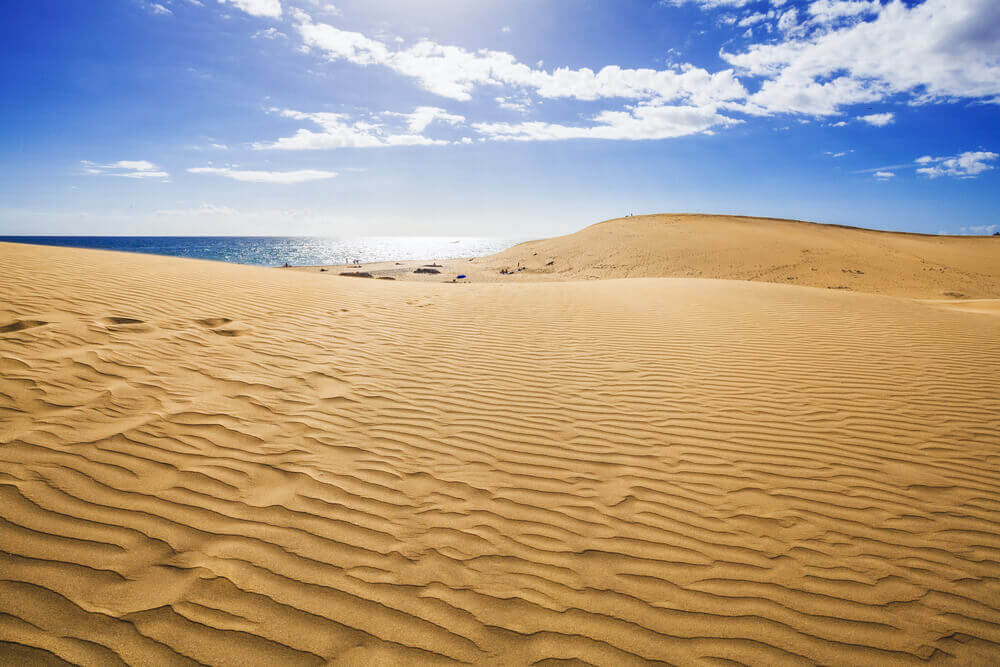
Let's start with one of the most popular tourist landmarks, a reference point for travel guides to Gran Canaria: the impressive Dunes of Maspalomas.
A golden ocean of sand located in the south of Gran Canaria, specifically in the municipality of San Bartolomé de Tirajana.
You can spend an amazing day at the beach here, where you will get the feeling of being in paradise, a sensation that will become an essential and unforgettable part of your holiday in Gran Canaria.
The Dunes of Maspalomas are one of the most photographed places of the islands because of the beauty of the dunes contrasting with the sea in the background, which adds rainbows of colours that leave spectacular snapshots that you will be eager to upload and tag in your social networks.
Tejeda
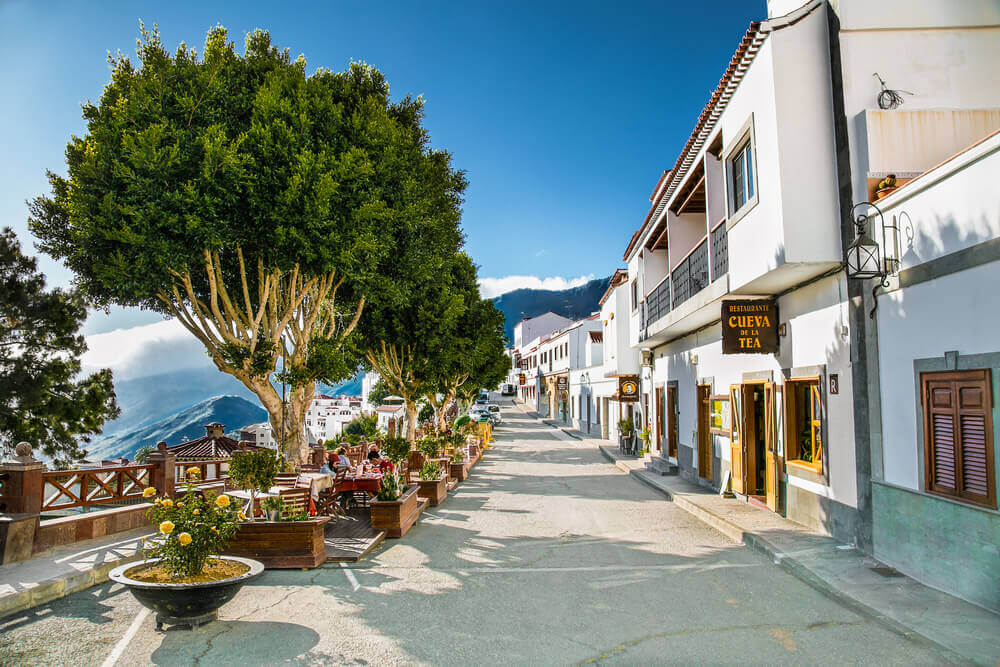
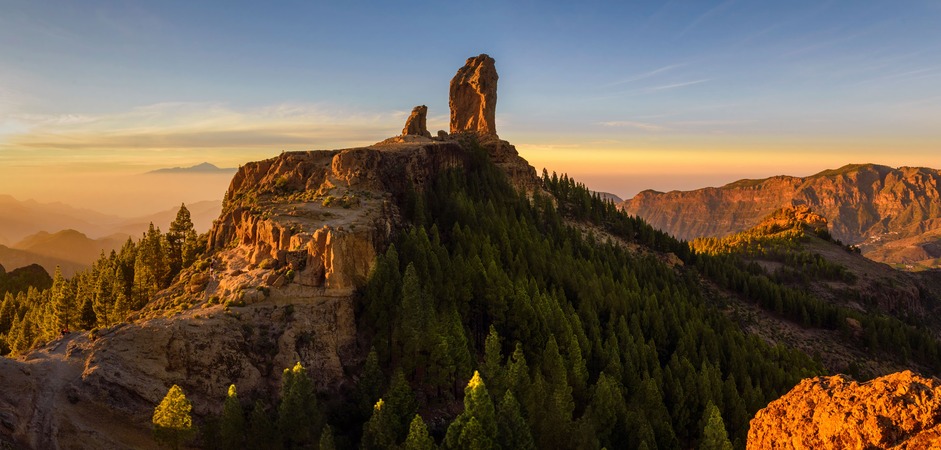
Moving away from the coast, we reach one of the most famous and beautiful municipalities of all the Canary Islands: Tejeda. Located in the centre of the island, the surrounding pine forests, endemic flora and beautiful rocky mountains, which rise above the sea of clouds, allow us to take photographs that will make us feel like true "pro" photographers.
- Roque Nublo: The "giant of the island", whose beauty can be appreciated from several points of the island as you delve into its interior. It is located at an altitude of 1,813 metres, which allows us, on clear days, to photograph it together with Mount Teide, which can be seen in the neighbouring island of Tenerife.
- Roque Bentayga: A natural landscape similar to Roque Nublo, has the same volcanic nature, a similar beauty and is just as photogenic as its companion - Roque Nublo. It is an orographic monument that rises to a height of 1,414 metres.
Agaete
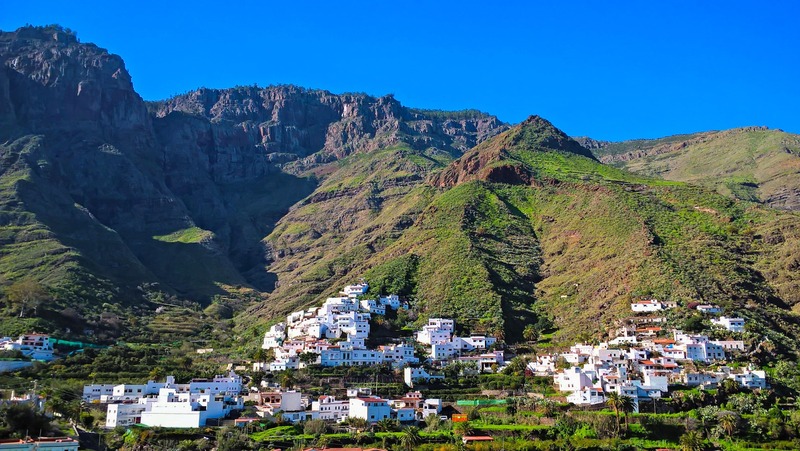
The north of Gran Canaria is home to an unsurpassed beauty, where the volcanic spirit of the island, whose formation leaves us with a coastline of solidified lava in the form of badlands, comes together in a harmonious and beautiful way.
Here the beauty lies in the simplicity of its landscape. This municipality, with its coastal village, its whitewashed houses and a coastline that embraces you with the sea breeze and the tranquillity that emanates from its coast, makes you fall in love with it.
Confital Beach
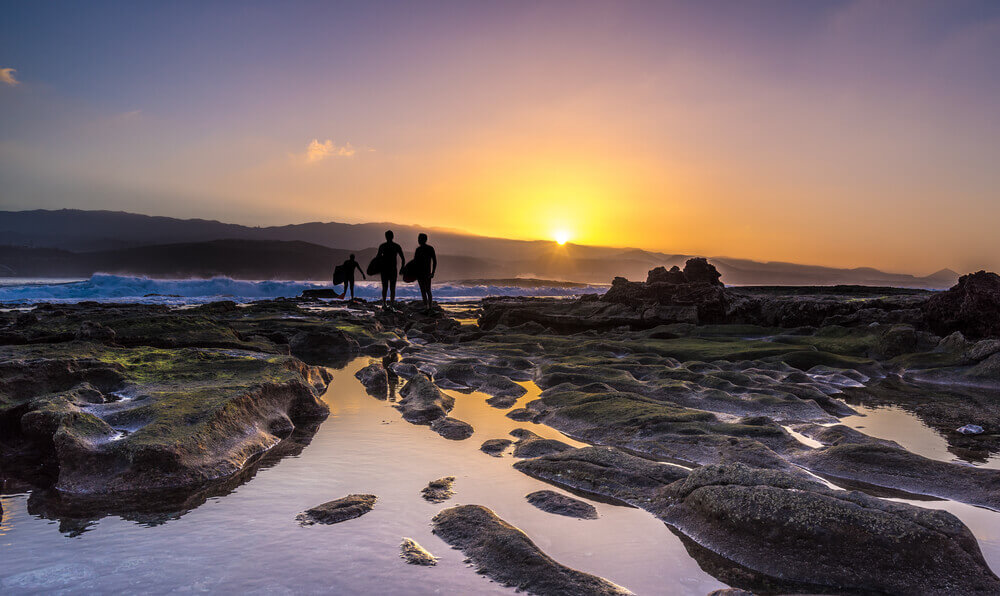
The Confital beach is located near La Isleta in the Gran Canarian capital of Las Palmas. Here the golden sand and volcanic rocks form coves of crystal clear water that will make you feel the need to capture the beauty of this beach which is well known to most of the locals.
El Barranco de las Vacas (Las Vacas Ravine)
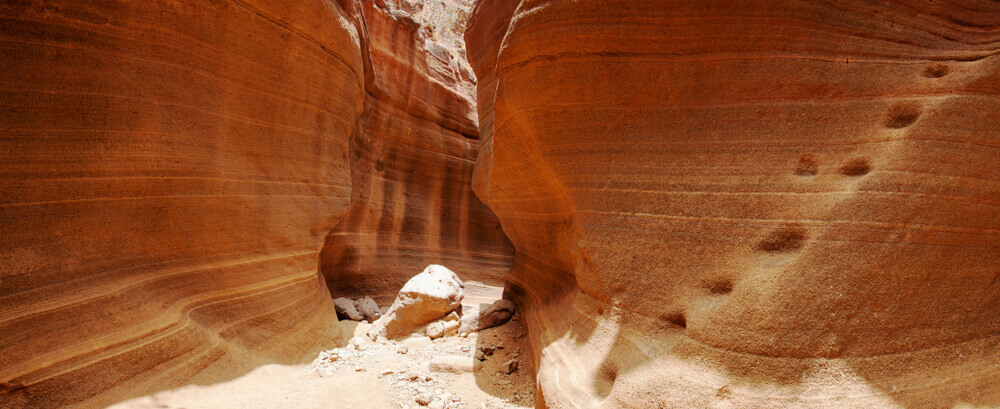
A place to take photos in Gran Canaria in the middle of a unique environment, where the erosion of the water, the volcanic activity and the passing of time have created the peculiarity of this ravine.
It is located in the municipality of Agüimes and it takes about 5 minutes to reach this spot, which is ideal to visit with children.
Things to know before visiting Barranco de las Vacas
Barranco de las Vacas has become one of the most photographed places in Gran Canaria, but its growing popularity has also brought a few drawbacks.
Before you visit, bear in mind that there is no official car park. Visitors often park on small informal areas of ground beside the GC-550 road, near kilometre 14. This can cause inconvenience and safety hazards for pedestrians, local residents and other road users, as the area is not designed for safe parking.
Furthermore, recent months have seen instances of vandalism targeting vehicles that were badly parked on the roadside or on private land in the area. To avoid fines, causing inconvenience to local residents or possible damage to your vehicle, we recommend not driving right up to the site.
A good alternative is to take public transport to a nearby stop and walk the final stretch. Not only is this a more sustainable option, but you will also help reduce overcrowding in this natural environment.
Other routes well worth discovering
If you’d rather enjoy spectacular landscapes in a more peaceful setting, Gran Canaria offers equally surprising spots that are far less crowded. Here are a few ideas:
- La Fortaleza de Ansite: an impressive archaeological and scenic site where you can learn more about the history of the island’s early inhabitants and enjoy magnificent views of south-eastern Gran Canaria.
- Los Azulejos de Veneguera: known as the “rainbow of Gran Canaria”, where the mountains reveal striking shades of colour.
- Caldera de Bandama: a spectacular volcanic crater with panoramic views and walking trails for all abilities.
Sometimes, stepping away from the busiest places is the best way to discover the essence of Gran Canaria.
And thus ends our top 5 incredible places to take photos in Gran Canaria and immortalise a holiday in a place that holds locations that are unique in the world and which is the perfect destination for photography lovers.
